
About
Senior technology leadership without the delivery handoffs.
We help organizations set technical direction, modernize aging platforms, connect fragmented systems, and turn difficult product and operational ideas into reliable software.
Why we exist
Organizations bring us in when an important initiative crosses business, architecture, data, security, and engineering boundaries. That may be a major platform modernization, a new AI-enabled product, an operating workflow that no off-the-shelf tool fits, or a technical roadmap that needs a credible path to production.
We provide senior technical ownership from discovery through launch. Strategy, architecture, implementation, testing, deployment, and documentation stay connected to the business outcome instead of being divided across layers of vendors and handoffs.
The standard
Working software that saves time, connects systems, reduces risk, or creates a useful new capability.
Every engagement begins by defining which of those outcomes matters and how the finished system will prove it.
How we work
Direct
The person making the architecture decisions remains accountable for implementation and delivery.
Outcome focused
Technical choices tie back to time saved, risk reduced, revenue enabled, or decisions improved.
Built to operate
Finished systems are tested, observable, documented, and designed for the team that will own them.
Where the perspective started
Before cloud architecture, there was the shop floor.
CloudTect's operating perspective comes from experience that began on a manufacturing floor at age 18: handling material and loading machines and trucks while still in high school. Shop-floor computer failures provided an early proving ground while night school for Computer Science provided the formal foundation. Resolving those failures kept production running, and the work became visible when a similar problem affected another shift. The studies and demonstrated skills led management to combine a move into shipping and receiving with responsibility for the company's IT work, where no formal department or dedicated internal owner had existed.
As the next generation of owners introduced continuous-improvement practices influenced by The Toyota Way, the work expanded into rotations through each department to understand how the business operated and where it could be improved. That experience provided an inside-and-out understanding of the manufacturing company, spanning purchasing through production, shipping, costing, and invoicing and connecting technical problems to the way work moved through the business.
The software came from that operating context: validated quality records, ERP-connected shipping documents, and automated job-cost review. The same approach later moved into large enterprise and federal environments, adding the architecture, cloud, data, and security depth that now informs CloudTect's work.
Read the manufacturing case studyExperience behind the work
Lessons earned in systems where scale and reliability were not optional.
Our delivery model draws on work across enterprise, federal, and product environments. The figures below reflect systems architected, modernized, secured, and operated throughout that broader experience.
- 60+ Azure subscriptions
- Cloud compliance engineering across a large federal estate.
- < 1 min Automated analysis
- A process that had consumed most of a business day.
- 30+ Data sources
- Integrated for petabyte-scale geospatial and mission workflows.
- 40+ Cloud subscriptions
- Covered by an enterprise security roadmap.
The background also includes Kubernetes-to-OpenShift modernization, award-recognized enterprise platform leadership, production computer vision, and security engineering across hybrid environments.
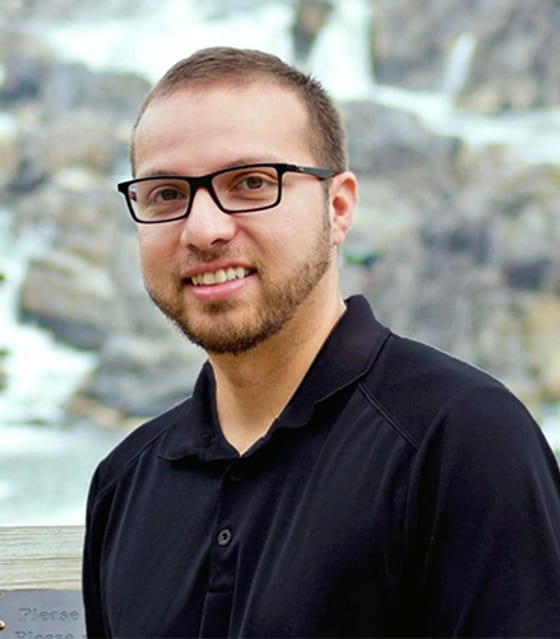
Founder and principal engineer
Andrew DiCosmo
A software architect and hands-on builder with an MS in Computer Science and an operating background that began in manufacturing. CloudTect was founded to bring enterprise engineering discipline to businesses that need direct, practical delivery from someone who understands both systems and the work around them.
Bring us the difficult system.
Describe what is slowing the business down and we will give you a direct assessment of the path forward.
Start a project